



It’s 16:30, a customer is waiting to pick up their car, and no one can find the keys. The mechanic thought the service advisor had them. The service advisor thinks they’re still in the vehicle. Sound familiar?
This kind of situation happens daily in auto repair shops — and it’s a direct result of inefficient car key management. Without a clear system, small mistakes quickly turn into delays, frustrated customers, and lost revenue.
A modern digital key management system eliminates these issues by introducing clear processes, real-time tracking, and automated handovers. Here’s how it works in practice:
- Manual systems (pegboards, clipboards) are prone to errors, theft, and inefficiency.
- Digital solutions provide real-time visibility, controlled access, and faster operations.
- Replacing a lost car key can cost hundreds or even thousands of euros, depending on the vehicle.
- Features like after-hours drop-off kiosks and payment-linked key release improve customer experience and save time.
Switching to a digital system not only prevents losses but also simplifies operations and builds trust with customers.
Common Mistakes in Manual Key Management
Relying on manual methods for key tracking in auto repair shops often leads to predictable headaches. Lost keys, unclear accountability, and workflow disruptions are just a few of the issues that can arise. Let’s dive into some of the most common pitfalls that can derail operations and impact profits.
Using Pegboards and Clipboards
Pegboards and clipboards might seem like simple solutions, but they often crumble under pressure during busy periods. Keys can easily fall off hooks, get attached to the wrong work order, or even be left inside vehicles after test drives.
These systems lack proper tracking, making it easy for keys to be misplaced or taken home without accountability.
No Accountability or Tracking
Without a reliable system to track who accessed each key and when, accountability becomes nearly impossible. Manual logbooks, often used in such setups, are prone to errors – entries get skipped, handwriting becomes illegible, or logs are simply forgotten during busy hours. This lack of traceability leads to disputes, especially in cases of vehicle damage or theft.
Time Wasted Searching for Keys
Misplaced keys slow down daily operations and create constant interruptions. Mechanics rummage through pockets, service advisors comb through clipboards, and managers interrupt tasks. This scenario plays out multiple times a day in busy shops, eating into valuable billable hours. The cost of replacing a modern car key can easily exceed €1,000, not including additional delays and operational disruption.
These challenges highlight why adopting a digital solution is essential for streamlining key management and keeping operations running smoothly in high-pressure environments like auto repair shops.
If after-hours key handover is one of your biggest challenges, here’s a detailed guide on how to handle car key handovers outside working hours and enable 24/7 access.
sbb-itb-d2f596d
Digital vs. Manual Key Management: A Comparison
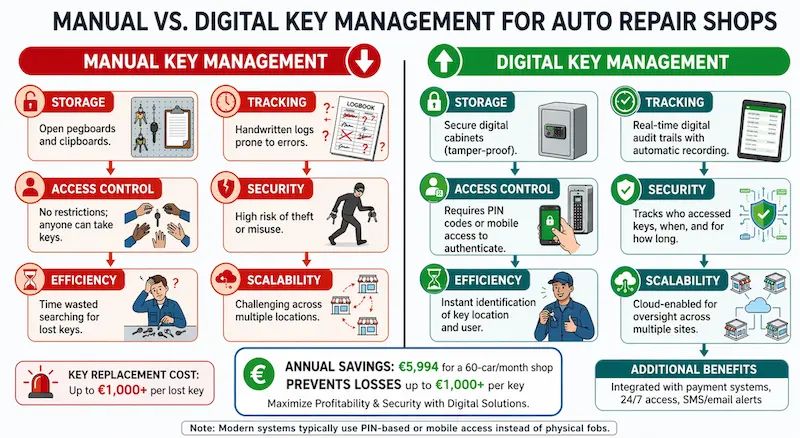
Digital systems solve the core limitations of manual key management by improving visibility, control, and efficiency.
Manual systems often depend on physical pegboards and handwritten logs, which can leave gaps in tracking and accountability. In contrast, digital systems automatically document every key movement, offering complete visibility into who accessed a key and when.
Main Differences Between Manual and Digital Systems
The contrast between manual and digital systems becomes evident in everyday operations. With manual pegboards, anyone can take a key without leaving a trace. Digital cabinets, however, require authentication — typically through SMS-based PIN codes or mobile access — ensuring every key movement is logged and traceable.
| Feature | Manual Key Management | Digital Key Management |
|---|---|---|
| Storage | Open storage | Secure digital cabinets |
| Tracking | Handwritten logs prone to errors | Real-time digital audit trails with automatic recording |
| Access Control | No restrictions; anyone can take keys | Requires PINs or mobile access |
| Security | High risk of theft or misuse | Tracks who accessed keys, when, and for how long |
| Efficiency | Time wasted searching for lost keys | Instant identification of key location and user |
| Scalability | Challenging across multiple locations | Cloud-enabled for oversight across sites |
Digital systems can integrate directly with auto repair shop software, accounting systems, and payment platforms, linking key custody to job cards and payment confirmations. This ensures that keys are released only once the job is completed and approved, reducing manual coordination and errors.
Cost and Efficiency Differences
Replacing a lost smart key can be expensive, and additional costs like towing and locksmith fees quickly add up. Digital key management minimizes these risks by maintaining secure storage and detailed accountability.
From Key Management to Automated Service Workflows
The real shift happens when key management is no longer treated as a separate process, but as part of the entire service workflow.
Modern systems connect booking, payment, and physical access into one seamless flow. For example, once a customer completes payment, they automatically receive access to retrieve their keys — without staff involvement.
This kind of payment-triggered access eliminates manual handovers, reduces errors, and allows workshops to operate efficiently even outside working hours.
Many workshops are now moving toward fully automated operations — including running without front-desk staff.
Key Features of Digital Key Management Systems
Digital key management systems combine secure storage, controlled access, real-time tracking, and adaptable scalability to meet the needs of modern businesses.
Secure Storage and Access Control
Unlike traditional pegboards where anyone could grab a key, digital key cabinets bring a new level of security. TThey require staff to authenticate their identity using PIN codes or a mobile interface before accessing keys. This ensures that only authorized employees can handle specific vehicles and creates clear accountability. This setup allows businesses to assign custom permissions based on roles or departments. For instance, off-site teams can access only the keys tied to their assigned vehicles. Creating a digital record that tracks its usage and ensures accountability.
While access control is vital, real-time tracking takes security and efficiency even further.
Real-Time Tracking and Notifications
Every key transaction is logged with timestamps and staff identifiers, ensuring complete transparency. This eliminates common delays, like the "07:30 bottleneck", and holds everyone accountable. Managers receive alerts if a key isn’t returned on time or when a customer collects their vehicle. Advanced systems even integrate with auto repair garage software and payment platforms, ensuring keys are only released once the job is completed and approved or payment is confirmed. Plus, these systems are built to handle disruptions – backup batteries and offline codes keep them running during power outages or internet issues.
In addition, modern systems can integrate with accounting software, ERP systems, and other business tools via APIs, automatically linking payments, invoices, and service workflows. This removes the need for manual reconciliation and ensures that financial and operational data stay in sync.
Scalability and Multi-Location Management
Digital systems are scalable, allowing workshops to manage anything from a few keys to hundreds across multiple locations from a single dashboard. For businesses with multiple locations, cloud-connected cabinets can be networked together, offering centralized control and visibility across all sites. From a single dashboard, managers can monitor vehicle status and key movements, even during after-hours operations. This scalability makes these systems a practical solution for both small teams and large, multi-site operations, ensuring seamless key management at every level.
After-Hours Key Handover and 24/7 Vehicle Access
Automating After-Hours Drop-Offs and Pickups
Most auto repair shops operate within fixed working hours, which limits flexibility for customers who often need to drop off or pick up vehicles outside working hours. Digital key management systems solve this problem with weatherproof smart kiosks that allow secure key drop-offs and pickups at any hour. When a customer schedules a service, they receive a unique PIN via SMS, which they can use to deposit their key securely at the kiosk – no staff needed.
For those dropping off a vehicle without an appointment, the process is just as simple. Customers scan a QR code, input their contact and license plate details, and the system immediately generates a work order. The key is then securely stored, ready for mechanics to access when they start their day. This setup eliminates the usual morning chaos, allowing mechanics to dive straight into billable work. With drop-offs streamlined, ensuring secure key access tied to payments becomes the next logical step.
Connecting Payments with Key Access
Integrating payments with key kiosks takes convenience to the next level while ensuring security. By connecting the system to payment platforms like Montonio or Stripe, shops can ensure that pickup codes are only issued after the invoice is paid online. Once the mechanic finishes the job, the system sends an automated payment link via SMS. Only after the payment is confirmed does the customer receive the final pickup code.
This approach not only safeguards revenue but also eliminates the bottleneck of afternoon checkouts. Service advisors are freed from processing payments during busy hours and can focus on more valuable tasks like consulting and upselling. For a shop servicing 60 cars a month, automating key handovers can save €5,994 annually by cutting 10 minutes per job at an hourly rate of €45.
Improving Customer Experience
Flexible access allows customers to drop off and pick up vehicles on their own schedule. They can drop off or pick up their cars at their convenience, whether it’s late in the evening or early in the morning. For example, someone finishing work at 18:00 can collect their car that same evening instead of waiting until the next day. The entire process – from drop-off to payment to pickup – happens seamlessly, with no need for phone calls or front-desk interactions.
These systems also provide complete audit trails, recording every key transaction with timestamps and user IDs. If there’s ever a dispute about pickup time, the system offers clear evidence. By combining automation with integrated payments, auto repair shops can improve efficiency while delivering a better experience for their customers.
Securing Keys and Avoiding Liability Risks
Replacing a lost car key can cost hundreds or even thousands of euros, making proper key management critical for auto repair shops.
Digital key management systems reduce this risk by storing keys securely and tracking every access event. Each key transaction is logged with timestamps and user identification, creating a clear audit trail.
This level of visibility helps resolve disputes quickly and ensures that workshops can prove who accessed a vehicle and when, reducing liability and improving accountability.
What efficient key management looks like in practice
- Customer books service online
- Receives instructions and access code
- Drops off keys securely (even after hours)
- Workshop completes the job
- Customer pays online
- Access to keys is granted automatically
This type of workflow eliminates manual coordination, reduces errors, and allows workshops to operate efficiently without constant staff involvement.
Conclusion
Key Takeaways
Switching to digital key management can save time, reduce risks, and provide clear audit trails to protect your shop from potential disputes. By automating the tracking of keys and linking their release to payment verification, you ensure that keys are only handed over once bills are settled – securing both your income and your reputation.
Moving away from old-fashioned pegboards and clipboards isn’t just about better storage; it’s about streamlining your operations, improving security, and enhancing the customer experience. When customers can drop off or pick up their vehicles at any hour without needing staff assistance, it sends a clear message: their time matters to you.
Use these insights to evaluate your current system and decide on the next steps for improvement.
Next Steps
If you’re ready to leave manual key handling behind, start by examining your workflow to pinpoint where delays occur in your vehicle processing. Look for modular solutions that can adapt to your shop’s growth – starting small and scaling up as needed.
The next step is moving from manual coordination to a fully automated workflow. Autlio’s integrated platform automates key exchanges and ties them directly to payment systems, cutting out manual tasks and after-hours coordination. This lets your customers retrieve their vehicles whenever it suits them – no need for front-desk staff. Start by automating key handovers and connect them with payments and access — this is where the biggest operational gains happen.
FAQs
How fast can we switch from manual key handling to digital?
Switching to a digital key management system is usually a fast process, often taking just a few hours, depending on your existing setup. It involves installing the system, training your team, and seamlessly integrating it into your daily operations. By doing so, you can say goodbye to tedious manual tasks like tagging and logging keys. This shift not only saves time but also boosts efficiency and enhances security for your shop right from the start.
Will a key system still work during power or internet outages?
A dependable key system ensures continued operation even during power or internet outages. This is possible through features like backup power or offline functionality, which keep access and security intact in tough circumstances.
Can key pickup be restricted until the customer has paid?
Key pickup can indeed be restricted until payment is confirmed by integrating payment verification with the physical release of keys. This approach adds a layer of security and allows for automated after-hours pickups. It also reduces the need for manual oversight, streamlining the process and saving time.